| Home | Registration | Program |
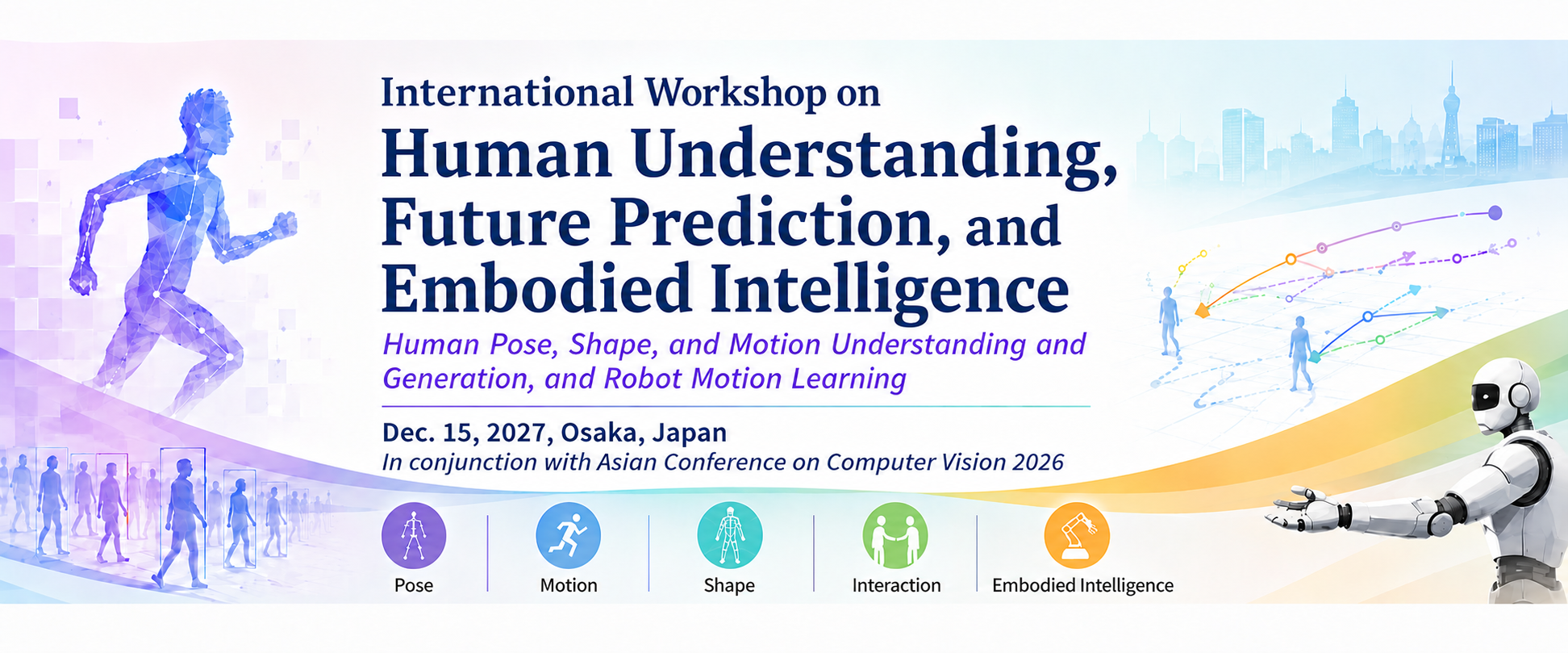
Recent advances in computer vision have substantially improved our ability to understand humans from images and videos, including human pose estimation, motion analysis, action recognition, interaction understanding, and scene understanding. At the same time, human-centric vision is increasingly expected not only to recognize present states, but also to predict future behaviors and support embodied systems that act in human environments. This shift connects human pose, shape, and motion understanding, human motion generation, human-object and human-robot interaction, and robot motion learning under a common question: how can visual systems understand, predict, and generate behavior in dynamic human-centered scenes?
This workshop brings together researchers working on human-centric visual understanding, future prediction, and embodied motion intelligence. The scope is organized around the following themes.
| Theme | Representative topics |
|---|---|
| Human understanding | Human pose estimation; human shape and mesh reconstruction; human motion understanding and forecasting; human action recognition and prediction; scene-aware human behavior analysis |
| Future prediction | Human trajectory prediction; crowd behavior analysis; social interaction modeling; multimodal and uncertainty-aware forecasting |
| Interaction modeling | Human-object interaction; human-robot interaction; socially aware visual reasoning |
| Embodied intelligence | Robot motion representation, learning, and generation connected to human understanding, prediction, or interaction |
| Foundation models | Vision-language models and foundation models for human-centric understanding, motion generation, future prediction, and embodied motion learning |
The workshop will provide a unified perspective on how visual perception can progress from understanding present human states toward predicting future human behaviors and generating actions for embodied agents and robots. By connecting human motion/action understanding and prediction with robot motion representation, learning, and generation, the workshop aims to encourage interactions among researchers from human-centric vision, motion forecasting, robotics, and embodied AI.
Recent CVPR, ICCV, ECCV, and ACCV workshops have addressed related topics such as human pose estimation, human-object interaction, and embodied AI. These workshops typically focus on individual subareas. This workshop instead provides a unified forum connecting human pose, shape, and motion understanding, human motion generation, trajectory prediction, social interaction modeling, robot motion learning, and embodied intelligence.
This integrated perspective is timely, as foundation models and multimodal reasoning systems increasingly connect perception, prediction, and decision making.
We invite original and unpublished research papers related to human understanding, future prediction, embodied intelligence, and robot motion learning and generation. Topics include, but are not limited to, human pose estimation, human motion understanding and generation, trajectory prediction, human behavior analysis, human-object interaction, human-robot interaction, embodied AI, vision-language models, and foundation models for human-centric perception and prediction.
Submission Format
Original submissions must follow the official ACCV 2026 paper format (Springer LNCS). Papers are limited to 14 pages, including all figures and tables, with an unlimited number of additional pages containing only references. Supplementary material is encouraged and should also follow the ACCV 2026 submission guidelines.
Review Policy
Original workshop paper submissions follow the ACCV 2026 double-blind review policy. Authors should prepare anonymous submissions that comply with the ACCV 2026 Author Guidelines.
Presentation of Recent Published or Accepted Papers
Authors of papers published or accepted in 2026 at international conferences or in international journals are welcome to present their work at this workshop if it is relevant to the workshop topics. This includes papers accepted to the ACCV 2026 main conference. These papers will not undergo a full peer-review process. The workshop organizers will assess the relevance of each submission to the workshop scope and decide whether it is accepted for presentation. Papers accepted under this category are for presentation only and will not be included in the ACCV 2026 workshop proceedings. Authors who wish to present such a paper should email the paper title and complete author list to hufpei.workshop@gmail.com by October 22, 2026.
Author Guidelines and Templates
Authors must follow the official ACCV 2026 submission policies and formatting requirements. Please refer to the following official ACCV 2026 resources:
Submission Site
Original workshop paper submissions are handled through OpenReview.
Proceedings
Accepted original workshop papers will be published in the ACCV 2026 Workshop Proceedings and therefore must satisfy all ACCV 2026 formatting and publication requirements.
Awards
The workshop plans to present a Best Paper Award, Honorable Mention Awards, and a Best Student Paper Award to recognize outstanding contributions. Further details on the selection criteria and eligibility will be announced on this website.
Important dates
All deadlines are at 23:59 GMT.
| Milestone | Date |
|---|---|
| Paper submission deadline | October 1, 2026 |
| Notification | October 15, 2026 |
| Previously Published or Accepted Paper presentation request deadline | October 22, 2026 |
| Previously Published or Accepted Paper presentation acceptance notification | October 24, 2026 |
| Camera-ready submission | October 24, 2026 |
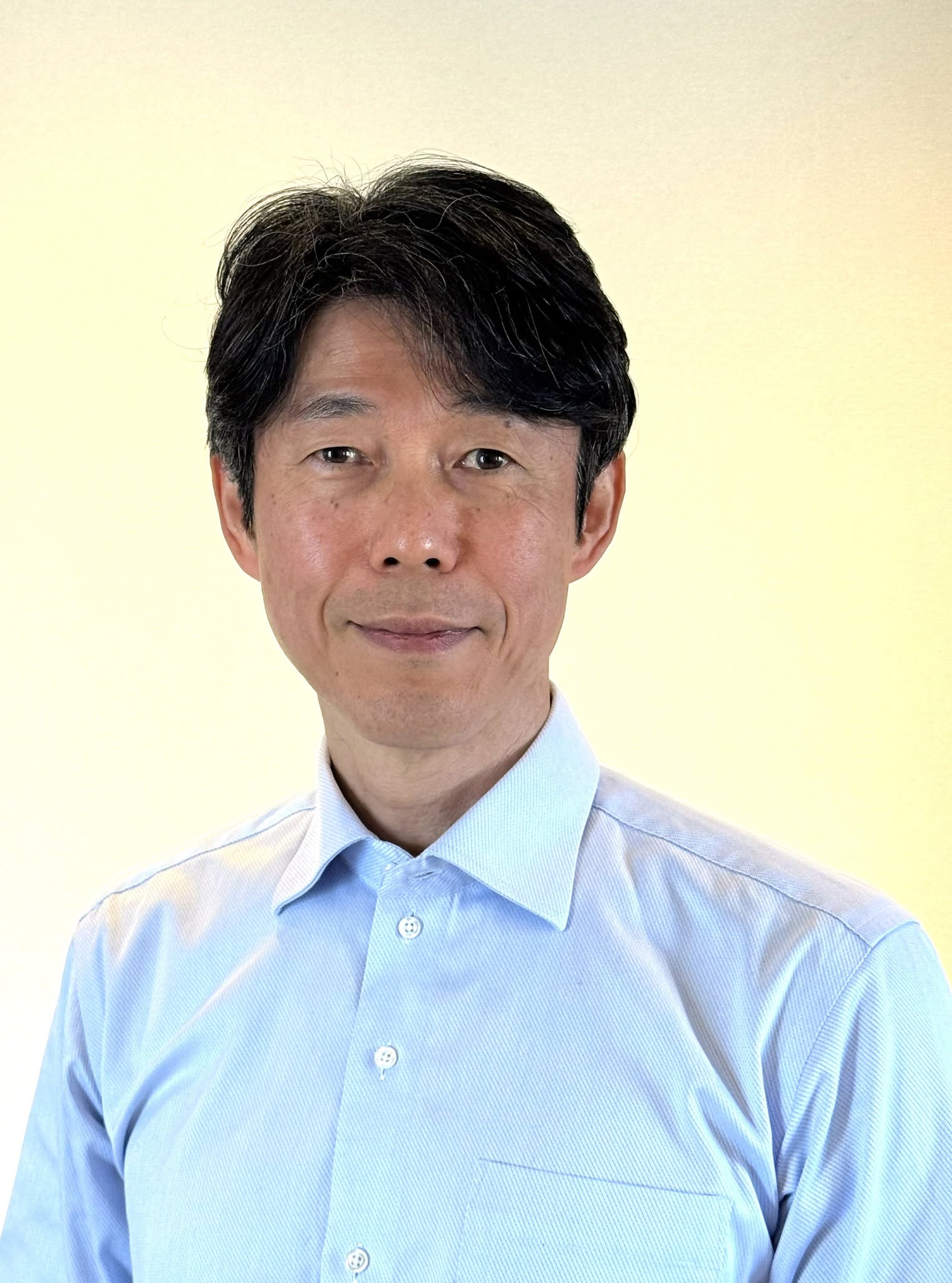 Yoichi Sato
The University of Tokyo (Japan)
Yoichi Sato
The University of Tokyo (Japan)
|
 Kent Fujiwara
LINE Yahoo (Japan)
Kent Fujiwara
LINE Yahoo (Japan)
|
 Taku Komura
The University of Hong Kong (Hong Kong)
Taku Komura
The University of Hong Kong (Hong Kong)
|
 Gim Hee Lee
National University of Singapore (Singapore)
Gim Hee Lee
National University of Singapore (Singapore)
|
 Angela Yao
National University of Singapore (Singapore)
Angela Yao
National University of Singapore (Singapore)
|
 Matthew Walter
Toyota Technological Institute at Chicago (USA)
Matthew Walter
Toyota Technological Institute at Chicago (USA)
|
The invited speaker lineup is designed to give the workshop technical depth and broad cross-community appeal. Yoichi Sato is a leading researcher in human-centric computer vision, with substantial contributions to egocentric vision, human attention, and behavior understanding; his recent involvement in large-scale egocentric activity resources such as Ego4D and Ego-Exo4D makes him an excellent speaker for connecting human understanding with real-world human activity analysis. Kent Fujiwara brings strong industrial research expertise in full-body human motion generation and motion-language modeling, including recent work on 3D human motion-language models with motion patches. Taku Komura is internationally recognized for character animation, data-driven human motion synthesis, physically based character animation, crowd simulation, and robotics, making him an ideal speaker for linking human motion representation with generative motion models. Gim Hee Lee will broaden the workshop’s scope to human reconstruction and robotics, with strong expertise in 3D vision, human reconstruction, and robot perception. Angela Yao will further strengthen the program on human pose and mesh reconstruction, bringing expertise in human-centric visual understanding and 3D human analysis. Matthew Walter will connect the workshop to embodied robot motion learning through his long-standing research on robot perception, planning, and human-robot collaboration.
Together, these speakers provide a well-balanced program spanning human behavior, motion generation, character animation, human reconstruction, robotics, and embodied learning. Their complementary perspectives from academia and industry across Japan, Hong Kong, Singapore, and North America directly support the workshop’s goal of connecting human pose, shape, and motion understanding, human motion generation, prediction, reconstruction, and embodied intelligence.
 Hiromu Taketsugu
Toyota Technological Institute (Japan)
Hiromu Taketsugu
Toyota Technological Institute (Japan)
|
 Shohei Nobuhara
Kyoto Institute of Technology (Japan)
Shohei Nobuhara
Kyoto Institute of Technology (Japan)
|
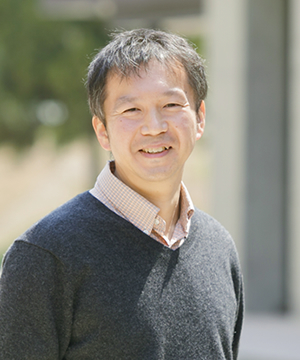 Hiroaki Kawashima
University of Hyogo (Japan)
Hiroaki Kawashima
University of Hyogo (Japan)
|
 Igor Vasiljevic
Toyota Research Institute (USA)
Igor Vasiljevic
Toyota Research Institute (USA)
|
 Federica Bogo
Meta Reality Labs Research (Switzerland)
Federica Bogo
Meta Reality Labs Research (Switzerland)
|
 Greg Shakhnarovich
Toyota Technological Institute at Chicago (USA)
Greg Shakhnarovich
Toyota Technological Institute at Chicago (USA)
|
 Ming-Hsuan Yang
University of California, Merced (USA)
Ming-Hsuan Yang
University of California, Merced (USA)
|
 Norimichi Ukita
Toyota Technological Institute (Japan)
Norimichi Ukita
Toyota Technological Institute (Japan)
|